English
Can bond funds lose money?Why they fall when rates rise, how far short- and long-term bond funds can drop, and what to do if yours is down
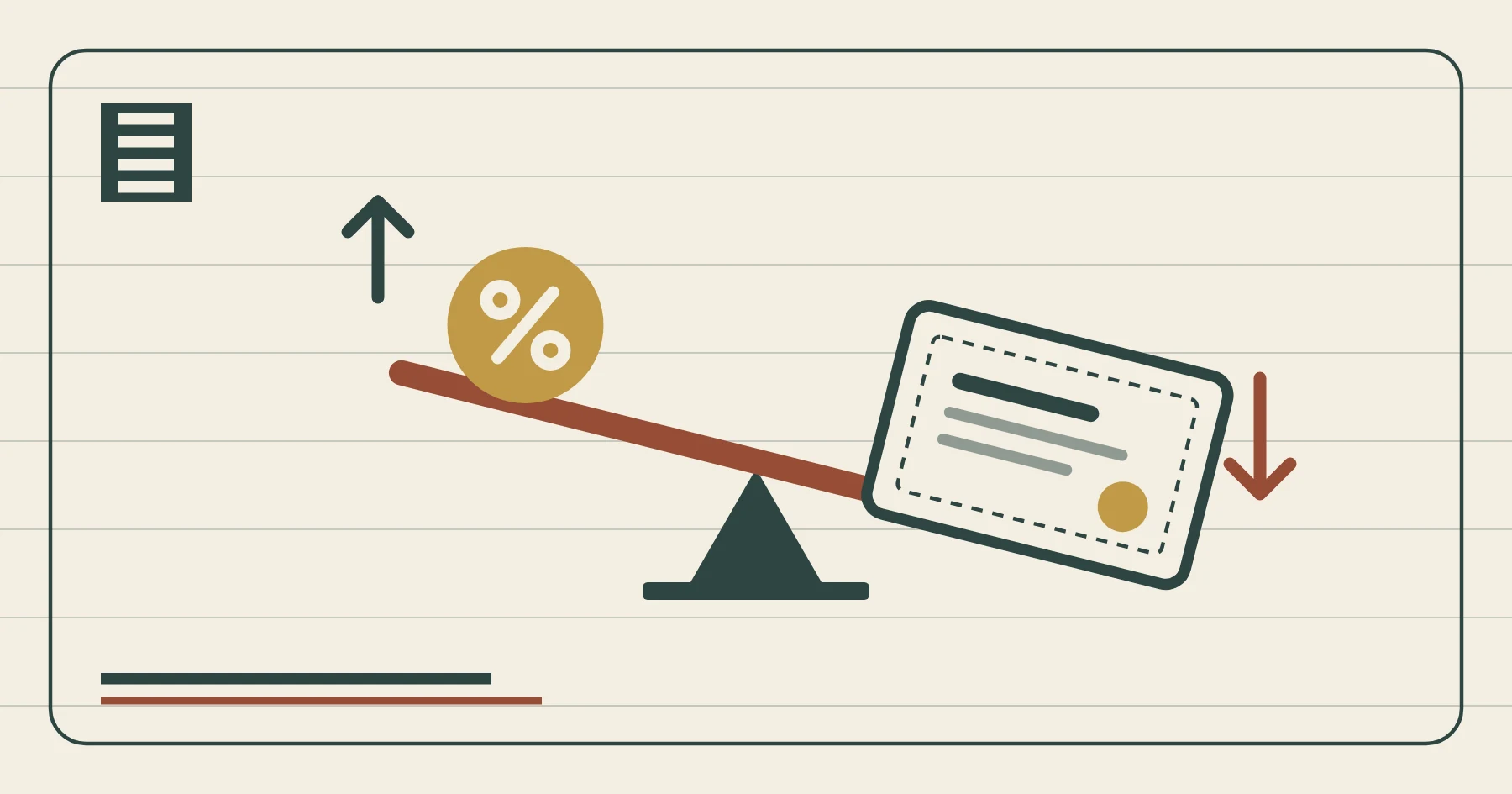
Yes. A bond fund has no maturity date and no guarantee, and its price moves every day with the market value of the bonds it holds. In 2022 the Bloomberg US Aggregate Bond Index lost 13.01%, the iShares 20+ Year Treasury Bond ETF (TLT) lost 31.41%, and even the 1-3 Year Treasury ETF (SHY) lost 3.90%. Rising interest rates cause most of these losses, and a fund's duration tells you roughly how big they can get. Defaults cause the rest, mainly in corporate and high-yield funds.
Losses can still happen this year: by 26 October 2026, TLT was down 3.09% as long-term yields climbed, and on 27 October the 30-year Treasury yielded 5.30%. Before you put money into a bond fund, check three things:
- When you will need the money. Money you need within six months belongs in savings or a money market fund. A short-term bond fund suits a year or two. A long-term bond fund only suits money you can leave alone for many years and watch fall without selling.
- The fund's duration. It is on the fund's fact sheet, and it is the best single guide to how far the price falls when rates rise.
- What it owns. A Treasury fund carries almost no default risk; a corporate or high-yield fund can lose money even when rates stand still.
On this page
- Why bond funds lose money when rates rise
- Duration: how far a bond fund can fall
- Why bond funds lost money in 2022
- Long-term bonds vs short-term bonds
- Bond fund vs holding a bond or T-bill to maturity
- Short-term bond fund vs money market fund
- Credit risk: the other way to lose
- What to do if your bond fund is down
- UK and other countries
- FAQ
Why bond funds lose money when rates rise
A bond's interest payments are fixed when it is issued. If new bonds start paying more, nobody will pay full price for an old one that pays less, so its price drops until a buyer would earn about the same as on a new bond. The SEC's investor bulletin uses a simple case: a 10-year bond paying 3% on $1,000 is worth about $925 a year later if market rates for similar bonds rise to 4%, and about $1,082 if they fall to 2%.
A bond fund values everything it holds at market prices every day, so when rates go up, the fund's price goes down. Holding a single bond, you can ignore that price and collect your $1,000 at maturity. A fund never matures: it keeps replacing bonds that come due, and when you sell your shares you get whatever they are worth that day.
Duration: how far a bond fund can fall
Duration, measured in years, works as a rule of thumb for price sensitivity: for every 1 percentage point rise in rates, the fund's price falls by about its duration in percent. Vanguard's fact sheets put it the same way: a bond fund with a 2-year duration would fall about 2% if rates rose 1 point, and rise about 2% if they fell 1 point.
| Fund (duration) | Rates +0.5 pt | Rates +1 pt | Rates +2 pts |
|---|---|---|---|
| SHY, 1-3 year Treasuries (1.78 years) | about -0.9% | about -1.8% | about -3.6% |
| BND, total US bond market (5.7 years) | about -2.9% | about -5.7% | about -11.4% |
| TLT, 20+ year Treasuries (14.95 years) | about -7.5% | about -15% | about -30% |
Durations from the funds' own pages: SHY and TLT effective duration as of 26 October 2026, BND average duration as of 30 September 2026. The rule ignores the interest earned along the way and is less exact for large moves.
To find your fund's duration, open its page on the fund company's website or its fact sheet and look for "effective duration" or "average duration". The same page shows the SEC yield, which is roughly what the fund earns now: on 26 October 2026 SHY's 30-day SEC yield was 4.64% and TLT's 5.30%.
Higher rates also have an upside. The fund reinvests at the new, higher yields, so its income goes up. A rough rule bond managers use: after a one-off rise in rates, an investor who stays in the fund for about as many years as its duration tends to make the loss back from the extra income. For a short-term fund that is a year or two; for a long-term Treasury fund it can be well over a decade.
Why bond funds lost money in 2022
Rates rose very fast in 2022. The 2-year Treasury yield went from 0.73% at the end of 2021 to 4.41% at the end of 2022, and the 10-year from 1.52% to 3.88%. Bonds bought at very low yields gave almost no income to cushion the fall, so the losses followed duration closely:
| Fund or index | 2022 return |
|---|---|
| iShares 1-3 Year Treasury Bond ETF (SHY) | -3.90% |
| Bloomberg US Aggregate Bond Index | -13.01% |
| FTSE Actuaries UK Conventional Gilts All Stocks Index | -23.8% |
| iShares 20+ Year Treasury Bond ETF (TLT) | -31.41% |
Fund returns at NAV, from the iShares product pages; UK figure in pounds.
Many people learned in 2022 that "bonds" and "safe" are not the same word. The Treasury bills and short-term funds came through with small losses; the long-term Treasury fund, often seen as the safe part of a portfolio, lost almost a third of its value.
Long-term bonds vs short-term bonds
| Short-term (SHY) | Long-term (TLT) | |
|---|---|---|
| Holdings | Treasuries maturing in 1 to 3 years | Treasuries maturing in 20 years or more |
| Duration | 1.78 years | 14.95 years |
| 30-day SEC yield | 4.64% | 5.30% |
| 2022 return | -3.90% | -31.41% |
| If rates fall 1 point | about +1.8% | about +15% |
Yields and durations as of 26 October 2026, from iShares. Price changes are duration estimates.
Right now a long-term fund pays only about 0.66 points more a year than a short-term one, while taking about eight times the rate risk. That trade only makes sense if you want a large gain should rates fall, for example as a hedge against a recession, and can sit through a large loss if they rise instead. For money you are keeping safe for a known date, short-term bonds or bills fit far better.
Bond fund vs holding a bond or T-bill to maturity
A Treasury bill pays its face value when it matures, in 4 to 52 weeks. Buy one at auction and hold it, and the price changes in between do not touch you. The same goes for a Treasury note or a CD held to its end date. A fund gives you diversification and lets you sell any day, but there is no date on which you are sure to get back what you paid.
If the date matters, say a house deposit next summer, buy bills or a CD that mature before then. How the two compare after tax is in CD vs Treasury bills, and the T-bill vs CD calculator runs your own numbers.
Short-term bond fund vs money market fund
Money market funds are kept on a much shorter leash by SEC Rule 2a-7: no single holding can mature in more than 397 days, the weighted average maturity of the portfolio must be 60 days or less, and set shares of assets must be convertible to cash within a day and within a week. Most retail and government money market funds aim to hold their price at $1.00 a share.
That makes them steadier than any bond fund, but they are not bank deposits. Investor.gov notes that money in a money market fund is not guaranteed by the FDIC, and the FDIC lists mutual funds, bonds and Treasury securities among the things its insurance does not cover. A short-term bond fund usually yields a little more than a money market fund in exchange for small price swings, as the 3.90% fall in SHY in 2022 showed. For money you may need at any moment, the money market fund or a savings account is the better home; see where to keep an emergency fund.
Credit risk: the other way to lose
Funds that hold corporate bonds, and especially high-yield ("junk") bonds, can lose money when companies default or when investors fear they might. Their prices tend to fall in recessions and market panics, exactly when stock prices fall too. A Treasury fund does not carry this risk.
On a fund's page, look at the credit quality breakdown. Mostly Treasuries, agency bonds and AAA-rated bonds means little default risk; a large share rated BB or below means the fund behaves partly like a stock fund.
What to do if your bond fund is down
- Work out why it fell. If funds with the same duration fell by a similar amount, rising rates are the cause. If yours fell much more than its peers, look at what it owns: lower-rated bonds, longer duration or a large holding in trouble.
- Compare your time frame with the duration. If you will not need the money for longer than the fund's duration, the higher income it now earns should make up much of a rate-driven loss over that time. If you need the money sooner, a fund was the wrong place for it; consider moving what you need soon into bills, a CD or a money market fund.
- Think about the tax. In a taxable account, selling a fund at a loss realises a capital loss that can offset gains elsewhere. IRS wash-sale rules disallow the loss if you buy the same or a substantially identical fund within 30 days before or after the sale.
- Do not reach for yield to catch up. Swapping into a high-yield or long-term fund because it pays more adds exactly the risks that caused the loss.
UK and other countries
- UK: conventional gilts fell 23.8% in 2022 as measured by the FTSE Actuaries All Stocks index, a bigger fall than in the US Aggregate, partly because gilts have longer average maturities. Gilt funds also have no maturity date. Individual gilts held to redemption pay back their nominal value, and gains on them are free of capital gains tax for individuals.
- Elsewhere: every bond fund or ETF fact sheet shows an average or effective duration and a credit quality breakdown. Multiply the duration by the rise in rates you could imagine to see roughly how much the fund could lose, and check whether your local deposit insurance covers the product (funds are almost never covered).
FAQ
- Can bond funds lose money?
- Yes. A bond fund's price follows the market value of its bonds, which falls when interest rates rise or when issuers default. In 2022 the Bloomberg US Aggregate Bond Index lost 13.01% and the 20+ year Treasury ETF TLT lost 31.41%. Unlike a single bond, a fund has no maturity date at which you are sure to get your money back.
- Why did bond funds lose money in 2022?
- Interest rates rose very fast. The 2-year Treasury yield went from 0.73% to 4.41% during the year and the 10-year from 1.52% to 3.88%, so existing bonds paying low rates lost value. Losses roughly matched each fund's duration: short-term Treasury funds lost about 4%, total-market funds about 13% and long-term Treasury funds about 31%.
- Can short-term bond funds lose money?
- Yes, but usually not much. The iShares 1-3 Year Treasury Bond ETF lost 3.90% in 2022, the worst year for bonds in decades. With a duration of 1.78 years, a 1 point rise in rates costs it about 1.8%, and its income tends to make that back within a year or two.
- Long-term bonds vs short-term bonds: which is better?
- Short-term bonds are better for money you need at a known date or want to keep steady. Long-term bonds pay a little more and gain more if rates fall, but lose far more if rates rise. In October 2026 a long-term Treasury ETF yielded 5.30% against 4.64% for a 1-3 year fund, with about eight times the rate risk.
- Is a money market fund safer than a short-term bond fund?
- Generally, yes. SEC rules keep a money market fund's average maturity at 60 days or less, so its price barely moves and most aim to stay at $1.00 a share. A short-term bond fund holds longer bonds and its price moves more. Neither is FDIC-insured.
Sources
- iShares Core US Aggregate Bond ETF (AGG): 2022 return of the Bloomberg US Aggregate Bond Index.
- iShares 20+ Year Treasury Bond ETF (TLT) and iShares 1-3 Year Treasury Bond ETF (SHY): 2022 and year-to-date returns, effective duration and SEC yield.
- Vanguard Total Bond Market ETF (BND) fact sheet: average duration and the duration rule of thumb.
- US Treasury: daily par yield curve rates: 2021, 2022 and 27 October 2026 yields.
- SEC Investor Bulletin: Interest rate risk: the $1,000 bond example.
- SEC Rule 2a-7, Investor.gov on money market funds and FDIC: what deposit insurance covers.
- TreasuryDirect: Treasury bills: terms and payment of face value at maturity.
- iShares Core UK Gilts UCITS ETF: 2022 return of the FTSE Actuaries UK Conventional Gilts All Stocks Index.