English
Staged-buy calculator: instalments and average cost
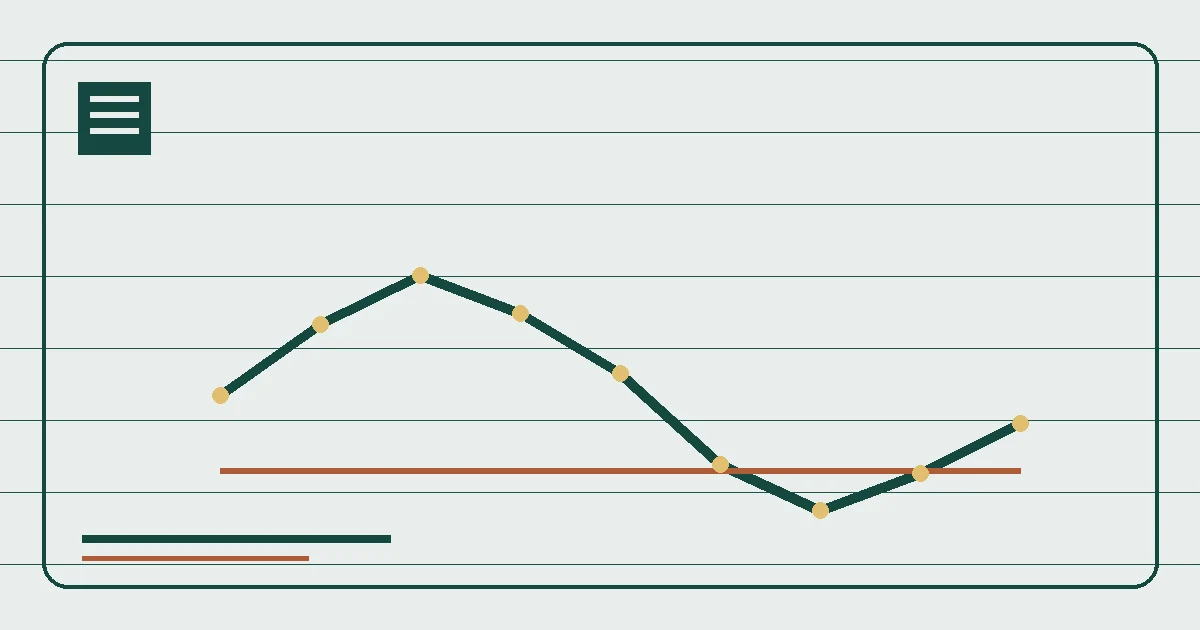
Buying in stages cannot guarantee a profit. It simply avoids putting the whole budget into one moment. This scenario assumes equal cash amounts and prices spaced evenly between the start and end values you enter.
Build a staged-buy scenario
Each purchase: $2,000.00. Total units: 111.804266. Average cost: $89.44.
This is not a price forecast. It assumes evenly spaced prices and fractional units, and excludes fees, slippage, tax and minimum-order rules.
Use it without fooling yourself
Set the total budget first, then choose time or price triggers. Do not let a falling price turn a capped plan into unlimited buying. Entering a higher final price also shows the average cost of buying into a rise.
Before acting, use the pre-buy checklist and confirm the resulting allocation with the rebalancing calculator.
How this calculator works
Four steps, all built on the assumptions you type in, with no price forecast anywhere:
- Amount per purchase = total budget ÷ number of purchases
- Price at each purchase: spaced evenly between the first and last price you enter
- Total units = the sum of (amount ÷ price) for every purchase
- Average cost = total budget ÷ total units
Note that last step: average cost is the budget divided by the units, not the prices added up and divided by the number of purchases. Those two figures are usually different, and the difference is the most interesting thing about buying in equal amounts.
Why the average cost sits below the average price
The default figures on this page show it plainly: a budget of 10,000 split into 5 purchases, with the price falling from 100 to 80. The five prices are 100, 95, 90, 85 and 80, whose arithmetic mean is 90. Yet the tool reports an average cost of 89.44, below 90.
The reason is simple: each instalment commits the same amount, not the same quantity. The same 2,000 buys 25 units at a price of 80 but only 20 units at 100. So the cheaper purchases end up holding more weight in your total position, which pulls the average cost toward the lower prices.
This is a mathematical property that holds whenever prices vary, and it requires no ability to predict anything. But see its limits clearly: it only guarantees your cost is below the simple average of those prices. It does not guarantee your cost is below the future market price. If the price keeps falling, you still lose.
Equal amounts and equal quantities are not the same thing
The effect above belongs to equal-amount buying only. Switch to buying the same quantity each time and it disappears:
- Equal amounts (what this tool models): you spend the same money each time. Low prices automatically buy more, and the average cost lands below the arithmetic mean of the prices.
- Equal quantities: you buy the same number of units each time. Your average cost then exactly equals the arithmetic mean of those prices, and the advantage above is gone.
On the same set of prices, equal amounts give 89.44 and equal quantities give 90. The gap is small, but it makes a point: the cost-averaging effect people talk about comes from the act of fixing the amount. Once you switch to buying more when it dips and less when it rises, you are betting on your own read of the market rather than following a rule.
What buying in stages cannot buy you
There is exactly one thing it buys: not having the whole budget riding on a single moment. Things it does not buy include:
- Any reduction in the asset's own risk. Something you should not be holding is still something you should not be holding when bought across five instalments.
- The upside in a rising market. If the price climbs the whole way through, a single purchase at the start would have done better. Enter a last price above the first and the tool will show you that cost too.
- Permission to keep adding. The usual failure is treating a fall as a reason for one more instalment, turning a capped plan into open-ended buying. The budget ceiling has to be fixed before the first purchase.
The prices in this tool are your own assumptions rather than a forecast, and it excludes fees, slippage, tax and minimum-order sizes. Use it to compare scenarios, not to estimate returns.
FAQ
- How is the average cost of a staged purchase calculated?
- Average cost = total budget ÷ total units, where total units is the sum of (amount ÷ price) across every instalment. Note that this is not the buying prices added up and divided by the number of purchases; that shortcut is only correct when you buy the same quantity each time.
- Why is the average cost lower than the average price?
- Because each instalment commits the same amount rather than the same quantity, the cheaper purchases buy more units and therefore carry more weight in the total position, pulling the average cost toward the lower prices. It is a mathematical property requiring no forecasting ability, but it only means your cost is below the simple average of those prices, not below the future market price.
- Does buying in stages protect me from losses?
- No. It removes the luck of committing everything at one price, and it does not change the risk of the asset itself. If the price keeps falling you still lose money, and if the price rises throughout, staging leaves you slightly worse off than a single purchase would have.
- How many instalments should I use?
- There is no optimal number. More instalments reduce the influence of any single moment, but fees and effort rise, and instalments that are too small can run into minimum-order sizes. The practical approach is to fix the total budget first, then pick a rhythm you will actually keep to, rather than treating the count as a parameter to optimise.