English
Your paycheck didn't shrink, so why does your money buy less?That gap is inflation, and it's where protecting your savings begins
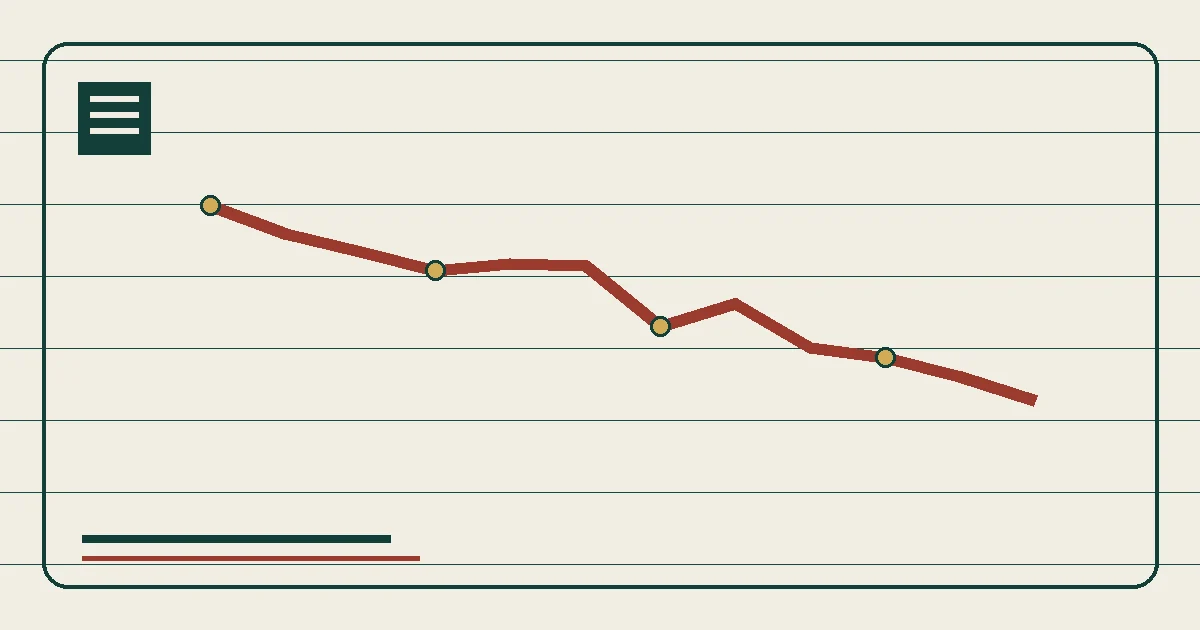
You have probably had this feeling at the end of the month: the number on your payslip is the same, you cannot recall buying anything big, yet the money just does not stretch like it used to. The same shopping basket costs noticeably more than a year ago. That is not bad memory, and it is not all overspending. It is something often treated as a news headline that actually happens inside your wallet every day: inflation.
This is the first lesson on HoldValue. Instead of throwing formulas at you, it tries to make three things clear: why cash quietly loses value, why "protecting" your money and "growing" it are two different goals, and which tools an ordinary person can use to steady their purchasing power. You will not finish this knowing what to buy. That is not the point. You will finish knowing where you stand and where to look next.
The money did not shrink; what it buys did
- Inflation does not withdraw money from your account. It makes the same money buy less, which acts like a hidden negative interest rate.
- Cash and low-interest deposits are slowly bleeding value against inflation, not sitting in a safe cushion.
- "Protecting" your money means not losing it to inflation and volatility. That is a different goal from "growing" it. Do not mix them up.
- No safe-haven asset is guaranteed to win. Understand each one's cost before deciding whether, and how much.
On this page
- Inflation is a number on the news, but a feeling in your wallet
- Why your felt inflation is often higher than the official number
- Work out your own inflation rate from last year's statements
- Why money loses value, without the formulas
- Where inflation comes from: the part you actually need
- "Protecting" and "growing" are two different jobs
- Cash and current accounts quietly lose too
- The same inflation hits different people differently
- The tools ordinary people can use
- There is no "safe and guaranteed": every tool has a cost
- What your money is worth in ten years
- When to stop and not act
- An order that works for beginners
- Beyond buying assets: a few everyday moves
- A few common misreadings
- FAQ
Inflation is a number on the news, but a feeling in your wallet
The consumer price index (CPI) published every month sounds like a macroeconomic affair, far from your life. But what it measures is exactly the price of a basket of everyday things: food, household items, rent, transport, healthcare. When the news says "inflation is 5%", in plain language that means the basket that cost 100 last year now costs about 105.
The trouble is that wages and deposit rates often fail to keep up. The number in your account does not move, yet the real goods it can buy shrink. That gap, where the figure stays the same but purchasing power falls, is inflation's most direct harm to ordinary people. It does not send you a notice like a bill. It is a slow boil: barely visible in one year, very visible across five or ten.
Why your felt inflation is often higher than the official number
Something used to puzzle me for years: the news would say inflation was a few percent, but when I did my own sums, my money seemed to be shrinking a lot faster than that. Eventually it clicked. Nobody was lying. The official figure and the figure in my wallet were simply measuring two different baskets of things.
The CPI uses a spending basket for an "average household", where food, clothing, housing, transport, healthcare, schooling, communications and entertainment are all mixed in at fixed proportions. In real life, though, no household actually spends in exactly those proportions. Your basket is put together by your own life, and it often looks nothing like the average one.
Take an example from people around me (the numbers are only illustrative and vary a lot by place and person): a young family renting in a big city, with a child, might spend three or four out of every ten pounds on rent alone, with school fees, tutoring and doctor's visits taking another big chunk. And rent, education and healthcare happen to be the things that, in many places, rise faster than prices overall. So the increase this family actually feels gets dragged upward by the very items that are climbing hardest. Someone who has paid off their home and whose children have grown up has almost none of these in their basket, so their felt inflation is naturally far milder. The same official number lands on two people with wildly different force.
There is another point that is easy to miss: people remember price rises unevenly. When something gets cheaper, you barely notice. But when something you buy often goes up, you get reminded at every checkout. The vegetables you buy daily, the rent you pay each month, the fuel you top up every few days: once these frequent purchases rise, the sting is vivid. Meanwhile the things you buy once every few years, or that quietly got cheaper (some electronics, say), never enter your memory at all. So "felt inflation runs high" is partly because your basket really is weighted toward fast-rising items, and partly because attention is naturally drawn to what goes up.
What is this good for? Two things. First, don't reassure or frighten yourself with the official number alone. What you should watch is the change in your own basket. Spend a moment recalling which few things have risen most sharply for you over the past year or two, because that is the real direction inflation is pushing you. Second, when you do the "Rule of 72" estimate further down, if your basket leans clearly toward rent, education and healthcare, it is fair to plug in a rate a little higher than the official figure. The sense of urgency you get will sit closer to your actual situation.
Work out your own inflation rate from last year's statements
The section above explains why the published figure and your own experience part company. Rather than argue about whose number is right, build your own. Your bank has already done most of the work: twelve months of statements is the raw material, and the arithmetic goes no further than multiplying and adding.
- Pull twelve months of statements and sort the spending into six buckets. Housing, food, transport, utilities, communications, and whichever line is heaviest in your particular household. Take one representative month, note what each bucket cost, and call the total M.
- Turn each bucket into a share of M. You have now built a basket. The official one is weighted for an average household across a whole country; yours is weighted for the way money actually leaves your account. That gap in weighting is the entire reason the published figure feels wrong to you.
- Find last year's price for the same thing in each bucket. Rent comes off the old lease. For food, pick three or four items you buy every week in an unchanged size, a litre of milk, a dozen eggs, rather than a whole shopping total, which moves when you change what you cook. Transport is the season ticket or the pump price. Utilities and phone are on last year's bill for the same month.
- Work out each rise, then weight it. The rise is this year's price minus last year's, divided by last year's. Multiply each one by that bucket's share, add the six products together, and the total is your own inflation rate.
- Subtract the interest rate on your savings. What is left is the real speed at which that money gains or loses ground. A negative answer means you are getting poorer while the balance on the screen gets larger.
| Bucket | Share of M | Rise over the year | Contribution (share times rise) |
|---|---|---|---|
| Food | 34% | 7% | 2.38% |
| Housing | 28% | 4% | 1.12% |
| Transport | 14% | 3% | 0.42% |
| Health or schooling | 13% | 6% | 0.78% |
| Utilities and phone | 11% | 5% | 0.55% |
The share column adds to 100%, and the contribution column adds to that household's own inflation rate. Swap the left-hand column for your own buckets and the method is unchanged.
This one comes to 5.25%. Set against a savings rate of 2%, the purchasing power is going backwards at roughly 3.3% a year, which is close to a tenth over three years while the statement balance climbs the whole time. That subtraction is the arithmetic behind the sentence people actually say, which is that the money has not shrunk but it no longer goes as far.
It is worth being equally clear about what the figure cannot do. It answers one question, how much your basket rose over the past year. It does not forecast next year and it is not a signal to buy or sell anything. A single year is easily thrown off by one house move, one illness or one change of job, so do not rebuild your finances around one result. Run it again next year and the year after, because the trend is the part that means something. Its real job is to turn a vague feeling into a figure you can put next to a deposit rate, or next to the yield a product is advertising at you, and subtract.
Why money loses value, without the formulas
Money has no value on its own. Its value comes from how much it can buy. In any economy, if the money in circulation grows faster than the goods and services available, each unit of money is spread thinner. That is the core of rising prices and falling purchasing power.
You do not need the mechanism by heart. Just hold one intuition: when the total amount of money grows faster than the total amount of stuff, money loses value. The speed varies hugely between countries. Some stay mild for years (a few percent a year), others run hot because of currency management or external shocks (double digits or more). Which one you live in directly decides how urgent protecting your savings is for you.
Where inflation comes from: the part you actually need
"More money, not enough stuff" is the intuition, but why the money grows and why the stuff fails to keep up comes down to several forces. Economics slices the causes very finely; ordinary people don't need to chew through all that. Three plain-language directions are enough.
- Demand-pull. Too many people want to buy, and there isn't enough to go round. Money is loose, everyone wants to spend, and sellers find they can raise prices and still sell out, so prices drift up. You see this after an economy overheats or after a burst of stimulus.
- Cost-push. Making and moving things gets more expensive. Raw materials, energy, freight and wages rise, and sellers pass the cost into their prices. A jump in the oil price rippling across everything is the classic case. This kind of rise isn't because people have more money; it is purely the cost being pushed through.
- Monetary. Money is printed too much, too fast. When a currency is issued far ahead of what the economy really produces, over a long stretch, each unit ends up matched to less stuff. The places that have lived through runaway inflation almost all trace back to this one.
In real life these three usually tangle together, and it is rarely possible to say a given price rise is a hundred percent one type, nor is there any need to. I set them out not to turn you into an analyst, but so that you have something solid to hold onto when you meet all the lurid inflation predictions out there.
That is the real use of knowing the causes: so you don't panic, and so you aren't swept away by extreme claims. Financial content never runs short of lines like "prices will double next year" or "the currency is about to collapse", and they feed on your vague fear of inflation. Once you roughly know whether a rise is coming from demand, cost or money, you can tell the difference: is this a short-term cost shock (some material is tight for now and may ease later), or a longer monetary problem (the kind that really does call for protecting your savings)? The judgement doesn't need to be precise. If it stops one scary forecast from stampeding you into a rushed move, it has already paid for itself. This runs along the same line as "when to stop" further down: the more you understand, the harder you are to lead around by your emotions.
"Protecting" and "growing" are two different jobs
This is the distinction I most want you to remember. The moment people think "my money should work", their mind jumps to "what will go up". But for most ordinary people, the first goal should be plainer: do not let what you have be eaten away by inflation and volatility.
Protecting aims to keep up with, or at least not lose to, inflation while keeping the principal as steady as possible. Growing aims to make assets clearly bigger, at the cost of higher risk and bigger swings. They are not opposites, but blending them is where people get hurt. Money meant to be "protected" gets pushed by a "let's grow it" mindset into things the person does not understand and cannot afford to lose. HoldValue is mostly about the first job: steady the ground first, then talk about the rest.
Cash and current accounts quietly lose too
Many people think, "I don't invest, so leaving the money sitting is safest." Sitting still does avoid market swings, but against inflation it is not standing still, it is slowly bleeding. If inflation is 5% and your current account earns close to 0%, your purchasing power falls by about 5% in a year. Over ten years the gap surprises even you.
Term deposits are better, because they pay interest. But the word that matters is real interest rate, that is the deposit rate minus the inflation rate. If the deposit pays 3% and inflation is 5%, the real rate is −2%: your balance rises while your purchasing power shrinks. This is not a reason to stop saving. Emergency money and money you need soon belong in the steadiest, most accessible place. The point is simply this: do not mistake "the number didn't drop" for "there was no loss".
The same inflation hits different people differently
Inflation gets described as "everyone getting poorer together", but the truth is more subtle: the same wave of rising prices lands on people in different situations in completely different ways and weights. Working out which group you fall into is far more useful than memorising the inflation rate, because it decides what you should worry about first.
From what I have watched over the years, it roughly breaks down like this:
- People living month to month, with little or no savings. They take the most direct squeeze: income is basically spent within the month, and when prices rise, what they used to afford no longer fits, so their quality of life is pressed down straight away. Not much of their cash is being diluted by inflation, because they can hardly save any; but with no buffer, the pain of rising prices arrives fastest and hardest. For them, rather than thinking about what to buy to protect value, the first move is to squeeze out a little emergency money, however small.
- People with a long mortgage and a steady income. Their position is a little counter-intuitive. If the loan is on a fixed rate, inflation in a sense "helps" them: they owe a fixed number, and as prices and nominal income rise, that debt gets relatively lighter, as if they are repaying an old, shrinking debt with money that is worth less and less. The catch is that income has to roughly keep pace with prices and the job has to hold. Once income falls behind, the mortgage will still crush them first.
- People living mainly on savings, a pension or a fixed payout. This is the most fragile group in an inflation. Their income is a fixed number that is hard to raise with prices, and what they lean on is exactly the cash and deposits most easily eaten by inflation. Every year prices rise, the same pension pot buys a little less, and that shortfall is hard to make back by "earning a bit more". For these people and their families, guarding purchasing power is not an elective. It bears directly on how they live in later years.
- People whose income can rise with prices. Think skilled workers with bargaining power, small business owners who can pass on higher prices, or roles with an inflation adjustment built into the pay. They are not immune, but their income side partly offsets rising prices, so life is relatively steady. This points to a direction that gets overlooked: keeping your own earning power from falling behind is itself a form of inflation defence. It isn't on the list of safe-haven assets, yet it is often the most reliable line of all.
I say all this not to pin a label on anyone, but so you place yourself first and then read on. The same article on protecting savings should lead someone living on a pension and someone whose pay rises every year to completely different actions. The clearer you are about your own situation, the less you will copy someone else's answer in picking tools and setting an order.
The tools ordinary people can use
Knowing the problem makes the tools harder to oversell. The directions ordinary people are usually pointed to fall into a few groups. HoldValue has a full piece on each; here is the map:
- Gold (and silver): treated as the old store of value, with a decent long-term record against inflation, though the price still swings hard. See ways ordinary people buy gold and silver is cheaper than gold, opportunity or trap.
- US dollars / foreign currency: a common hedge where the local currency falls fast, but cash is still eroded by inflation, plus exchange-rate and control risks. See how ordinary people hold a little US dollars.
- Short-term government bonds: relatively steady, income-bearing, low volatility, for money you want calm but not idle. See why short-term bonds count as "steady".
- Bitcoin: some call it "digital gold", but its biggest difference from gold is extreme volatility and the highest risk, fit only for a small slice you can afford to lose. See is "digital gold" a fair label.
To compare what each one protects against, how volatile it is and how easy it is to sell, go straight to the safe-haven assets comparison.
There is no "safe and guaranteed": every tool has a cost
If someone tells you a thing both protects your money and is guaranteed to win, raise your guard at once. That sentence is the most common opening line of a scam. The reality is that every protective tool pays a price on some axis:
- Gold fights inflation over the long run, but can go years without rising and can still fall 20% in the short term.
- Foreign currency hedges a falling local currency, but does nothing about the inflation of the foreign currency itself, and adds exchange-rate swings.
- Government bonds are steady, but returns are limited, and prices move when rates move.
- Bitcoin can rise frighteningly fast and fall just as fast, which makes it the wrong place for money you need to stay calm about.
Seeing the cost is what stops you expecting one tool to do everything, and it is why "diversify" and "only invest money you can afford to lose" get repeated so often.
What your money is worth in ten years
There is an estimate you can do without a calculator, the "Rule of 72": 72 ÷ the annual inflation rate gives roughly the years for purchasing power to halve.
- Inflation 3%: 72 ÷ 3 = 24, about 24 years to halve.
- Inflation 6%: 72 ÷ 6 = 12, halved in about 12 years.
- Inflation 12%: 72 ÷ 12 = 6, halved in six years.
To know which number to use, look up your own economy's inflation for recent years (the World Bank and IMF databases below both have it) and plug it in. This step matters: how urgent protection is should come from your real numbers, not a feeling.
When to stop and not act
If you see these, stop first
- Someone "guarantees" a high, safe, never-lose return. Ask who pays you back if it does lose, and watch how vague the answer gets.
- You are rushed: "buy today or it's gone", "limited spots". Real protection never relies on manufactured urgency.
- You would need emergency money, borrowing or leverage to take part. That is no longer protecting, it is gambling.
- You cannot say how a product makes money or when it would lose it. Leave it alone for now.
Protecting savings is slow work. Missing some "opportunity" is almost never a real loss; acting in a hurry before you understand is the real reason most people lose money.
An order that works for beginners
If you are just starting to think about this, follow this order rather than agonising over what to buy first:
- Set aside emergency money first. Money that covers a few months of expenses and can be withdrawn anytime goes in the steadiest place, with no exposure to swings. This is the foundation.
- Then get to know the tools. Learn what gold, foreign currency, bonds and bitcoin each protect against and what they cost (HoldValue has a piece on each).
- Only then talk about allocation. Use only money that "wouldn't hurt your life if lost", diversify, spread purchases over time, and don't put it all in the one you understand least and that swings most. For how to set the size, see how much is "a small slice".
If you live in a high-inflation environment, the order is the same but the urgency is higher. See how an ordinary household protects savings when the currency keeps falling.
Beyond buying assets: a few everyday moves
The moment protection comes up, attention jumps straight to "what should I buy". But for most people, before you touch a single asset there are a few everyday moves that take little effort, carry no market swings, and pay off more if you do them first. They won't make you rich, but they genuinely reduce the leak in your purchasing power.
- Don't leave large amounts of cash in a zero-interest account. A current account is convenient, but it pays almost nothing, which means inflation eats the lot. Beyond your emergency fund, even shifting the rest into a steady deposit that stays accessible, or matures flexibly, beats letting it sit. This step needs no investing knowledge at all; it just turns "taking the full hit from inflation" into "at least catching a little interest".
- Lock in the long-term costs you can. Some expenses you can actually fix the price on in advance: negotiating a longer rental term with a cap on rises, or renewing a long-term service before a price increase. When you expect something you use regularly to keep climbing, locking today's price in for a stretch is a plain form of inflation defence, and it involves none of the risk of buying and selling assets. Just don't take on a long contract you don't need purely to "lock a price".
- Keep enough emergency cash, but not far more. The emergency fund is the foundation, as I keep saying. But the other side is worth a reminder: parking a sum well beyond a few months of expenses in a zero-interest place, long term, as "emergency" money, is trading purchasing power for an excess of safety. Enough is enough. The surplus should join the "get to know the tools, then talk about allocation" path above, rather than sit idle and take the inflation hit.
- Watch your real take-home, don't be soothed by the nominal figure. A 3% pay rise and a 3% deposit rate both sound like they are going up, but if inflation is higher your real purchasing power is still shrinking. Build a habit: whenever you see a "growth" number, quietly subtract inflation, and what's left is what you actually gained. That small move spares you a lot of "feels better, actually worse" illusions.
What these share is a low bar: no betting on luck, no need to understand any complicated product first. Get these solid, then go near gold, foreign currency and the rest, and you'll find your nerves are far steadier, because the foundation is already there.
A few common misreadings
| What people assume | What's actually true |
|---|---|
| "Leaving money untouched is safest" | Untouched money is still eroded by inflation. What's safe is money you need soon, not all money sitting in a current account for years. |
| "A term deposit can't lose" | Look at the real rate (rate minus inflation). If it can't beat inflation, the balance rises while purchasing power falls. |
| "Protecting means buying gold or bitcoin" | Those are just tools, each with risk. Protection is a process of understanding first, then choosing, not buying one thing. |
| "Gold / bitcoin only go up" | Both can go years without rising or fall hard short term. Treating a protective asset as a sure winner is a common start to losing money. |
| "I'll think about it when I have more money" | Inflation works on small amounts too. The earlier you understand, the less likely you put survival money in the wrong place. |
FAQ
- Does inflation affect me if I don't invest?
- Yes. If you hold cash or bank deposits, inflation affects you. It doesn't withdraw money from your account; it makes the same amount buy less, like a hidden negative interest rate. The more idle the money, the more it is affected.
- If I put money in a term deposit, is it safe from inflation?
- Not necessarily. It depends on whether the deposit rate beats inflation. When the rate is below inflation, after prices rise your real purchasing power still shrinks, just more slowly than cash.
- Does protecting my savings just mean buying gold or bitcoin?
- No. It is a process of understanding the risks first, then choosing tools. Gold, foreign currency, bonds and bitcoin each have a use and a cost. None suits everyone, and none is guaranteed to win.
- I don't have much money. Is this worth the effort?
- Yes. Inflation works on small amounts too, and mistakes are harder to recover from when you have less. Understanding the ideas and parking your emergency money safely matters far more than rushing to make money grow.
- Why does my felt inflation always seem higher than the number on the news?
- Because the official figure measures a fixed basket for an average household, and the way you actually spend often looks nothing like that basket. If more of your money goes on things that rise quickly, such as rent, education or healthcare, your felt rate will run higher. On top of that, people remember price rises more sharply than price falls, so anything you buy often stings the moment it goes up. What matters is the change in your own basket, not the headline number applied straight to your life.
- Besides buying assets, what can I do day to day to lose less?
- A few low-effort moves help: don't leave large amounts of cash sitting in a zero-interest account, lock in long-term costs where you can (for example a longer rental term), keep enough emergency cash but not far more than you need, and subtract inflation from any "growth" number so you only look at the real amount. None of this involves market swings, and all of it genuinely reduces the leak in your purchasing power, so it's worth doing before you touch any asset.
Sources
To check the real inflation figures for your own economy and run the estimate above, start with these public sources (figures and definitions as shown on each site):
- World Bank: long-run public data on inflation and prices by country.
- International Monetary Fund (IMF): inflation and macro data by economy.